Building your dream home gym begins with choosing the right equipment, and a power rack is one of the most important investments you can make. Whether you're looking to gain strength, improve your fitness, or add variety to your workouts, a power rack provides the flexibility and safety you need. Hamilton Home Fitness is a trusted leader in the fitness industry, offering power racks that stand out for their durability, design, and ease of use.
This guide will show you how to set up your Hamilton Home Fitness power rack for squats, bench presses, and pull-ups. It doesn’t matter if you’re new to working out or an experienced athlete, this guide will help you make the most of your equipment and take your fitness to the next level.
Why Choose Hamilton Home Fitness Power Racks?
Hamilton Home Fitness is committed to providing the highest quality fitness solutions. We focus on delivering equipment that helps you reach your goals safely and effectively. Our power racks are a prime example of this dedication. Here's why our power racks should be your go-to choice:
Built to Last: Our power racks are made from heavy-duty steel, designed to withstand even the toughest workouts. Whether you're lifting heavy or working through intense training, Hamilton Home Fitness racks provide the strength and reliability you need for years to come. They are designed to handle your fitness journey, no matter where you’re starting or how far you plan to go.
Versatility for All Types of Workouts: A power rack is a versatile piece of equipment. It allows you to perform a wide variety of exercises with safety and precision. Whether you're focusing on squats, bench presses, pull-ups, or other strength training moves, our power racks can handle it all. It’s the perfect equipment for building muscle and improving your overall fitness.
Customer Trust & Satisfaction: When you choose Hamilton Home Fitness, you are joining a community of fitness enthusiasts who trust our products. Our racks are crafted with attention to detail and superior customer service, which is why we receive consistent praise for both our product quality and customer support.
Hamilton Home Fitness power racks give you more than just equipment—they offer an investment in your health, fitness, and future. When you choose us, you’re choosing a brand that understands your fitness needs and helps you succeed.
How to Set Up Your Power Rack for Squats
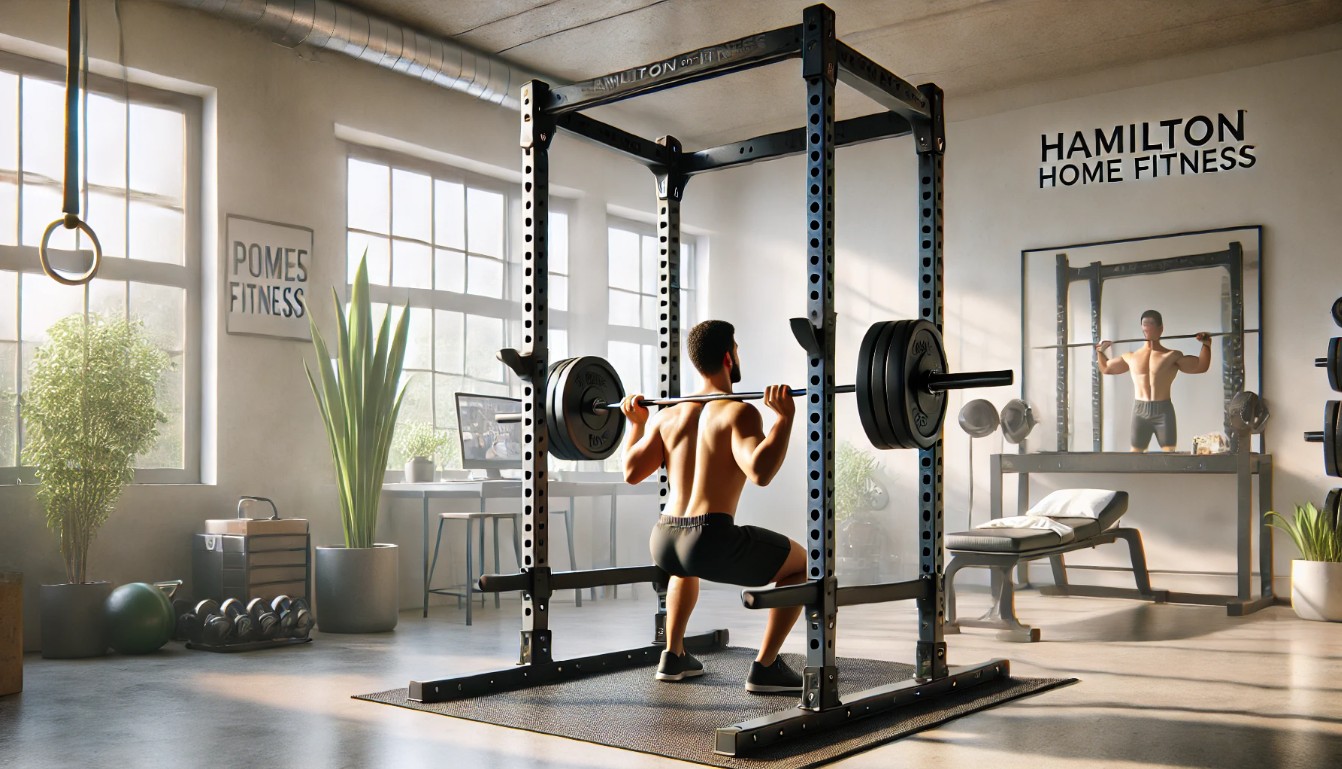
Squats are one of the most effective exercises for building strength in your legs and core. A power rack is crucial to perform squats safely, especially when you're lifting heavy weights. Here's how to set up your Hamilton Home Fitness power rack for squats:
Position the Safety Bars: The first step in setting up your power rack for squats is adjusting the safety bars. These bars should be set just below your lowest squat depth. This is important because if you fail during a lift, the barbell will rest safely on the safety bars, preventing injury.
Adjust the J-Hooks: The J-hooks should be positioned at shoulder height. This makes it easy to unrack the barbell when you’re preparing for your squat. Ensure that the J-hooks are securely locked in place to prevent the barbell from slipping out during the lift.
Load the Barbell: Once the J-hooks are in place, load your barbell with the desired weight. Be sure to add collars on each side of the barbell to prevent the weights from sliding off during your set. Always check that the weights are secure before beginning your workout.
Stand in Position: Once the barbell is loaded and secure, step underneath it. Position the barbell across your upper traps or shoulders, ensuring it is centered and comfortable. Keep your feet shoulder-width apart, and ensure your grip on the bar is firm and balanced.
Perform the Squat: As you lower into the squat, focus on keeping your back straight and your chest lifted. Engage your core to protect your spine. Bend your knees and lower your body, keeping your knees aligned with your toes. When you reach the bottom of the squat, press through your heels to stand back up, fully extending your legs. Repeat the movement for your desired number of reps.
Rack the Barbell: Once you’ve completed your set, carefully rack the barbell back on the J-hooks. Make sure the bar is secure before stepping away from the power rack.
How to Set Up Your Power Rack for Bench Press
The bench press is a great exercise for building upper body strength, particularly in the chest, shoulders, and triceps. Using your power rack for bench presses provides an added layer of safety and control. Here’s how to set up your Hamilton Home Fitness power rack for bench pressing:
Position the J-Hooks: For the bench press, adjust the J-hooks to chest height. This makes it easier to unrack the barbell and begin your set. The J-hooks should be aligned with the barbell's weight, ensuring a smooth transition when you lift.
Set Up the Bench: Place your workout bench in the power rack, ensuring that it is positioned directly under the barbell. Make sure the bench is stable and at a comfortable angle for your press. Hamilton Home Fitness offers adjustable benches that complement our power racks perfectly, ensuring comfort and safety.
Load the Barbell: Once the bench is in place, load the barbell with your desired weight. Again, make sure the weights are secure using collars. It’s crucial to check this before beginning your set.
Unrack the Barbell: Lie back on the bench and grip the barbell with your hands slightly wider than shoulder-width apart. Keep your feet flat on the floor and your core engaged. Push the barbell off the J-hooks and lower it slowly to your chest. Maintain control and focus on the movement.
Perform the Press: Press the barbell back up, fully extending your arms, and then slowly lower it again for the next rep. Keep your elbows at about a 45-degree angle to your body to protect your shoulders.
Rack the Barbell: After finishing your set, carefully rack the barbell back onto the J-hooks. Make sure it’s secure before you step away from the bench.
How to Set Up Your Power Rack for Pull-Ups
Pull-ups are one of the best exercises for building upper body strength, especially in the back, arms, and shoulders. Your Hamilton Home Fitness power rack can easily accommodate pull-up bars, giving you the perfect setup for this challenging exercise.
Adjust the Pull-Up Bar: Many Hamilton Home Fitness power racks come equipped with adjustable pull-up bars. Set the bar at the right height for your pull-ups. The height should allow you to fully extend your arms without touching the ground when hanging from the bar.
Grip the Bar: Once the bar is set, grip it firmly with both hands. You can choose between a wide grip, neutral grip, or narrow grip depending on the specific muscles you want to target.
Perform the Pull-Up: Engage your core and pull your chin above the bar. Slowly lower your body back to the starting position, keeping control throughout the movement. Perform as many reps as your workout plan suggests.
Secure the Bar: After completing your pull-up set, make sure the bar is properly secured. If your rack allows for different pull-up grips, you can adjust the bar for your next set of exercises.
Ready to Elevate Your Fitness Journey?
Hamilton Home Fitness is here to help you get the most out of your workout. Our power racks are built for strength, safety, and versatility. Whether you're squatting, bench pressing, or doing pull-ups, Hamilton Home Fitness has the perfect solution for you.
Explore our range of power racks and start transforming your home gym today! Visit our home page or check out our Power Racks & Cages page for more information. Want a deeper dive into power racks? Be sure to read our Power Rack Ultimate Guide for expert tips and advice.
Take the next step in your fitness journey with Hamilton Home Fitness—where quality meets performance.